Liners often talk about the trick of stuffing newpaper into wet shoes to help them dry out. I have to admit I’m a tiny bit skeptical about whether the newpaper really makes a difference. I definitely could believe it does, but I also could believe the shoes would dry out just as much without the newspaper. So I decided to run a properly controlled scientific experiment to find out—and I’m sure some of you data-obsessed people will be interested in the results!
See Phase II of this experiment here.
HYPOTHESIS
Stuffing newspaper into wet sneakers will help them dry out faster.
CONTROL & VARIABLE
Two identical wet sneakers are used. One sneaker is stuffed with newspaper; the other is left empty to dry.
METHODOLOGY:
20 July 2024
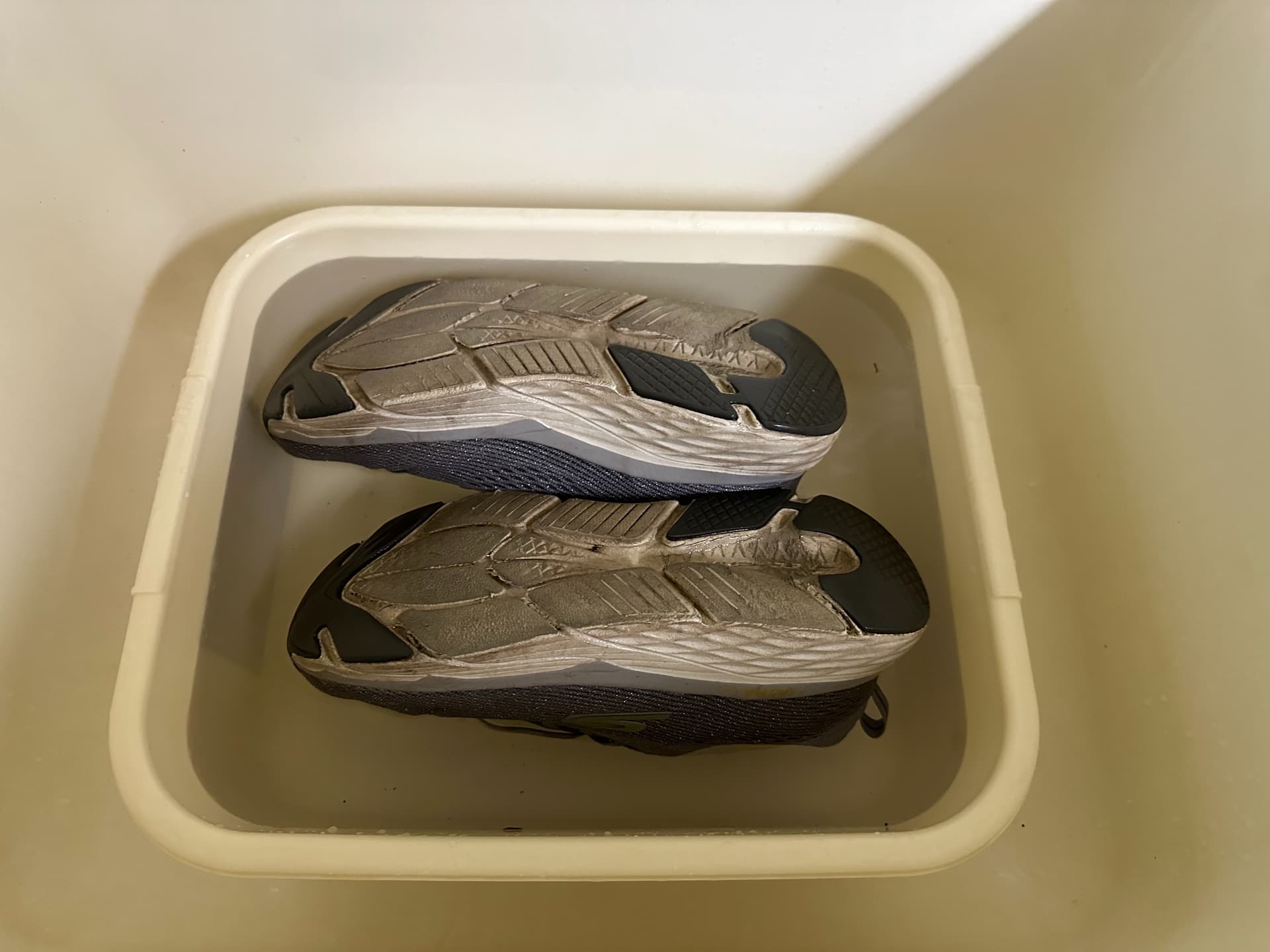
6:00p: The sneakers are soaked for a few minutes.
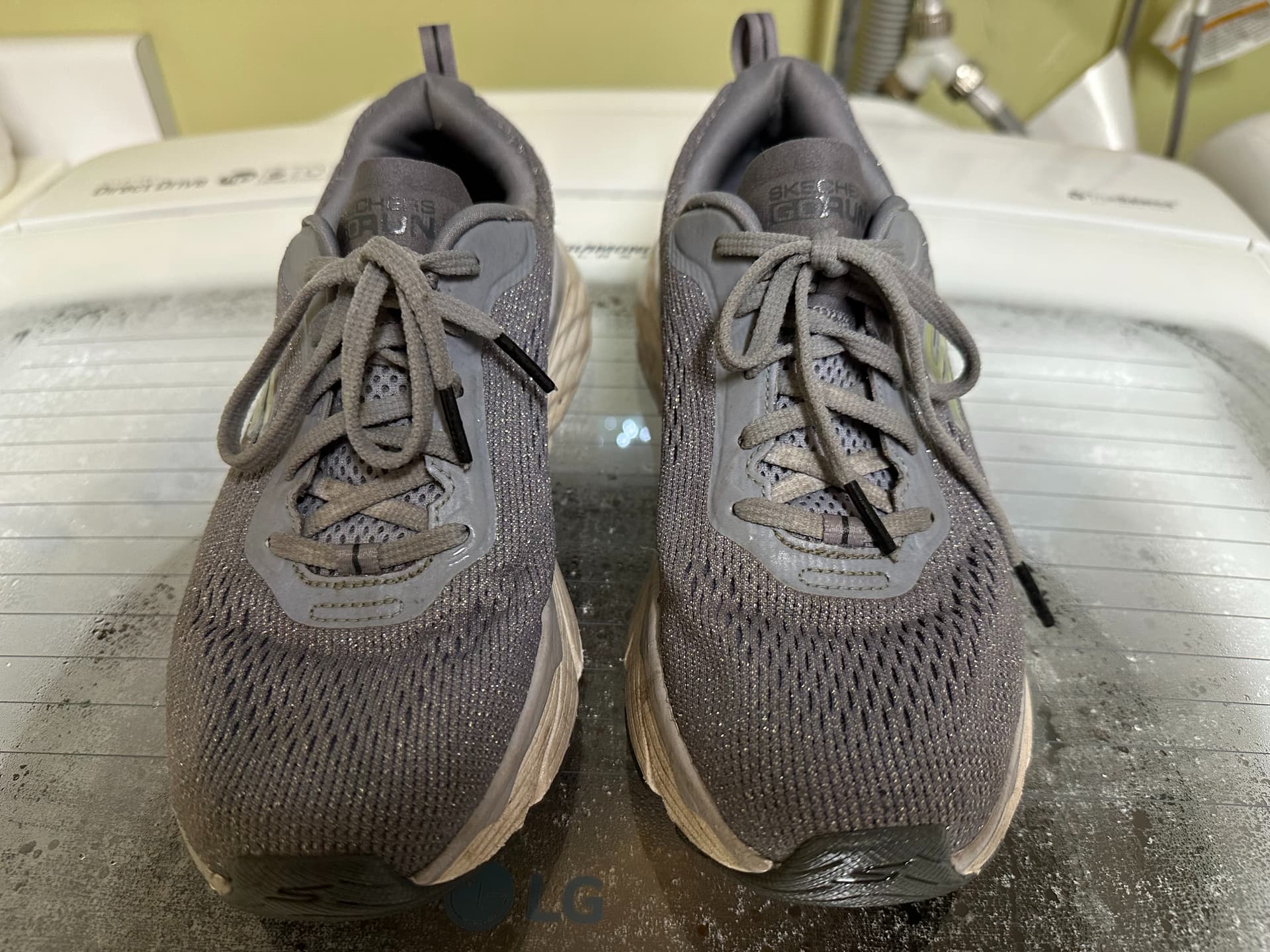
6:05p: The wet sneakers are set next to each other to dry.
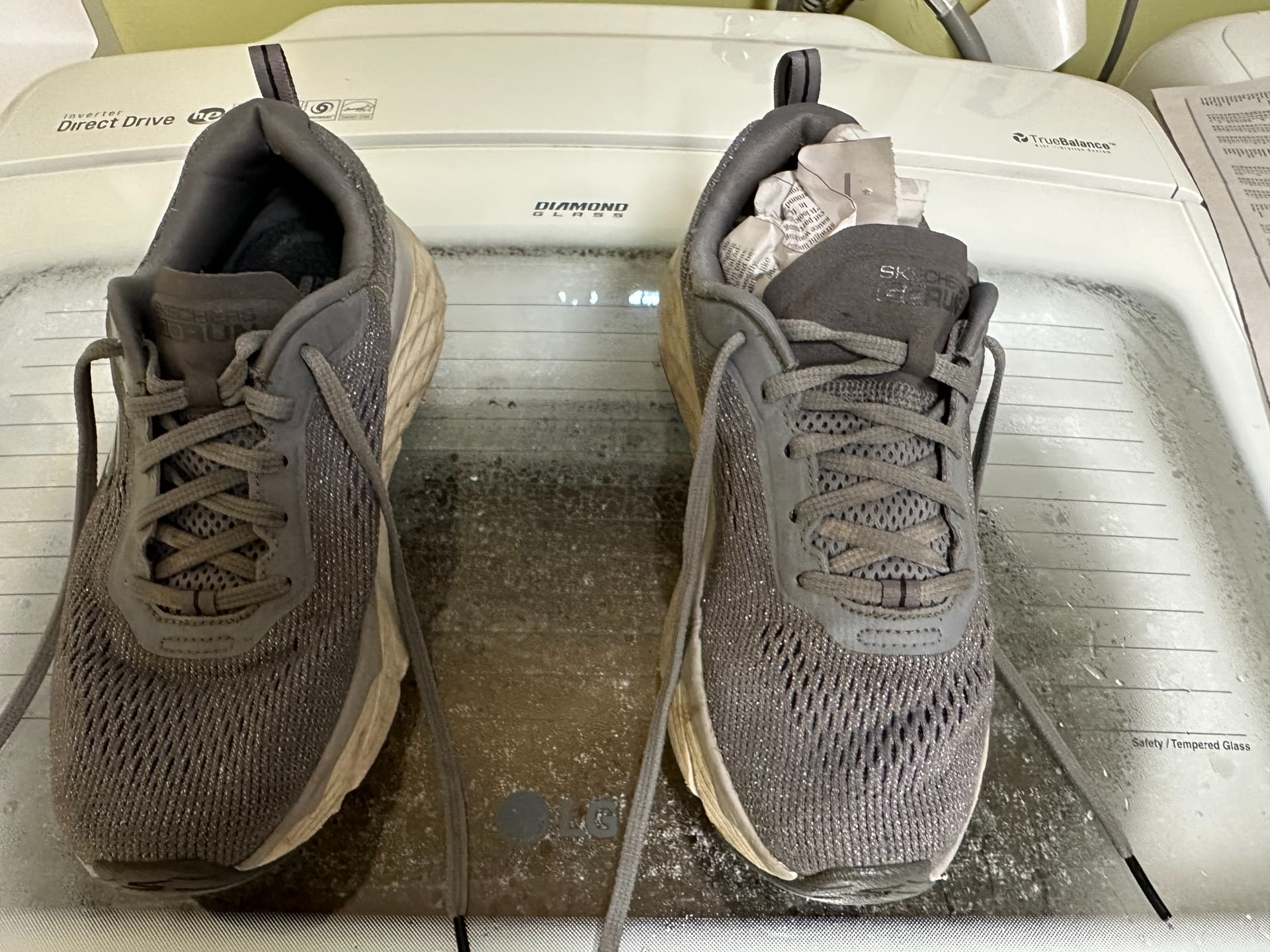
6:06p: One sneaker is stuffed with newspaper. Two double sheets and one single sheet (10 pages) are used.
The sneakers will be observed tomorrow morning to compare levels of dryness. Observations will continue at intervals throughout the day, and the following day(s), until both sneakers are completely dry.
6:52p Based on input from field observers, the methodology was slightly adjusted. The newspaper in the stuffed sneaker was observed to have already absorbed considerable moisture, so it was replaced with fresh dry sheets. This time only two double sheets (8 pages) were used, as there was some concern that the initial stuffing may have been excessive and could possibly result in the shoe being stretched out.
7:12p The newspaper stuffing was observed to have absorbed more moisture from the shoe, but not nearly as much as the initial batch did. Most of the second batch of newspaper was still dry. The second batch was discarded and replaced with a fresh supply of dry newspaper—again, two double sheets.
21 July 2024
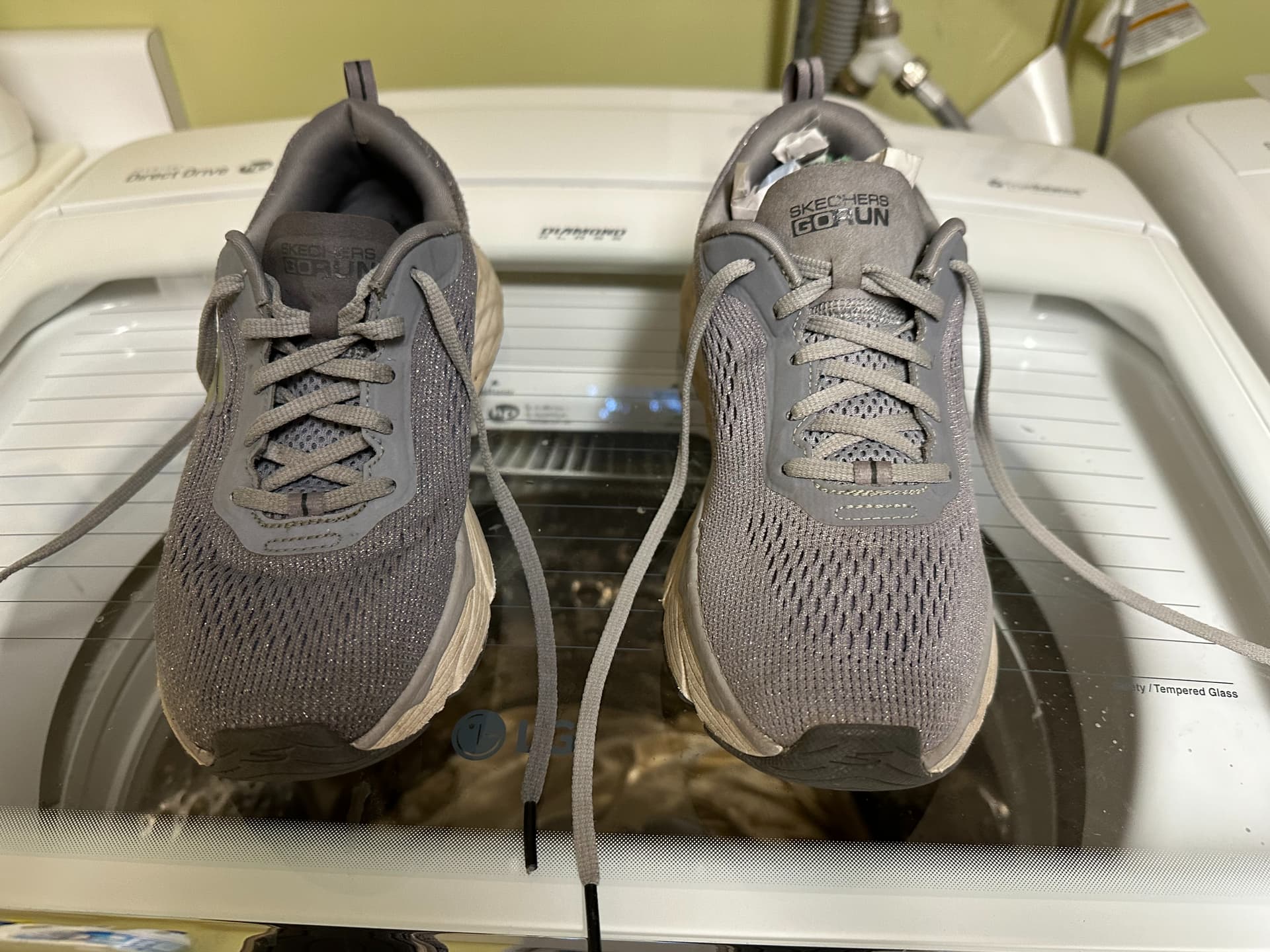
7:40a The sneakers are confirmed to have been undisturbed overnight.
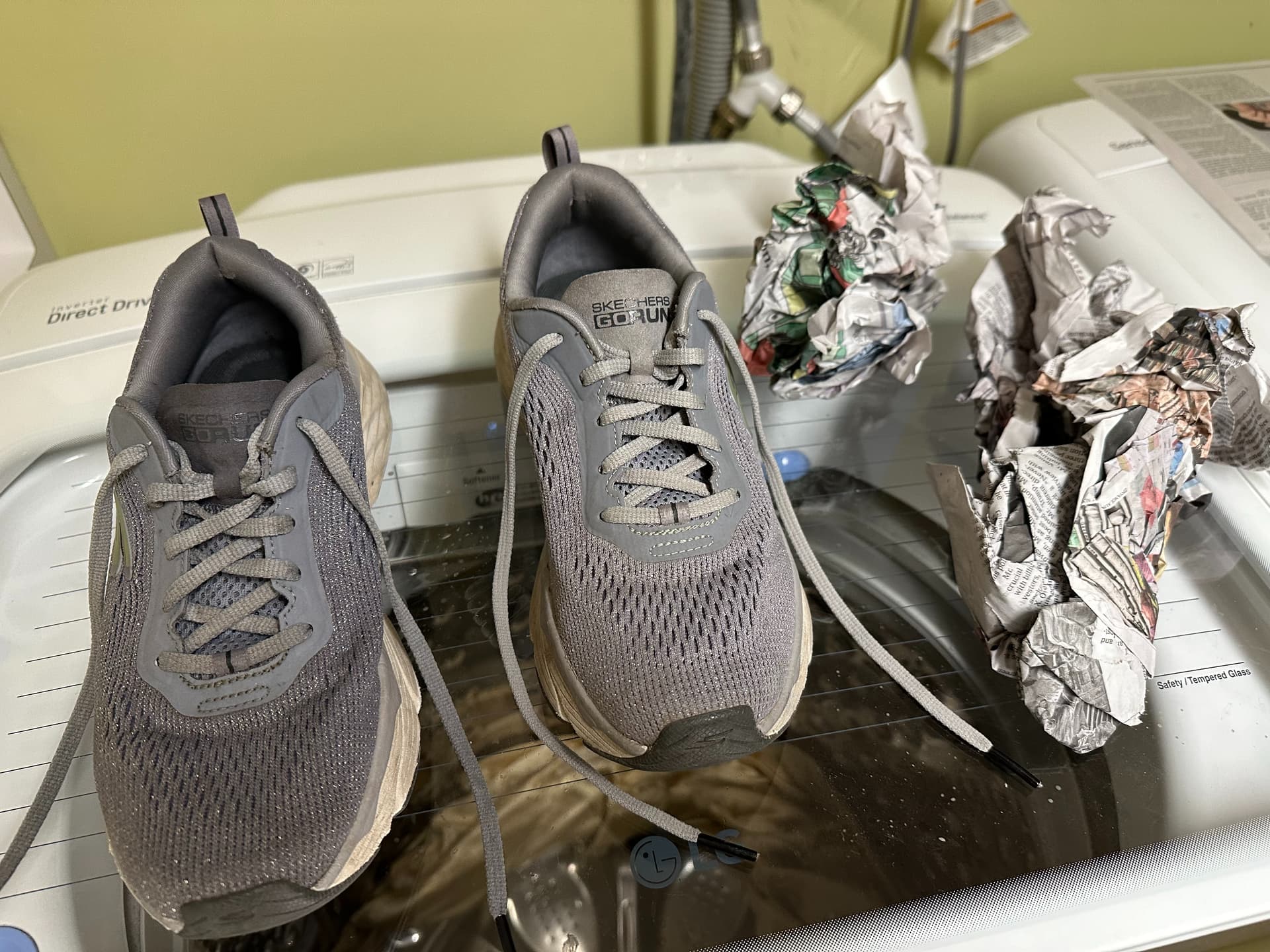
7:41a The newspaper is removed from the stuffed sneaker. From visual and tactile observation, the removed newspaper is found to be only slightly damp.

7:43a The sneakers are moved to a location with better lighting for observation and photography.
FIRST OBSERVATION:
Visual observation of the test sneaker (the one that had been stuffed) shows it to be significantly lighter in color than the control sneaker, indicating a drier state. Tactile observation reveals the test sneaker to be virtually completely dry, while the control sneaker is still very wet.
The experimenter deems the test sneaker to be approximately 98% dry. The shoe’s tongue, made of a thicker and less porous material than the rest of the shoe’s upper, retains a very slight moist feel, and the overall feel of the sneaker is what might be described as faintly humid.
The experimenter donned the test sneaker and walked around for 5 minutes. (The control sneaker was omitted from this part of the experiment as it was not in wearable condition.) There was no noticeable transfer of moisture from test sneaker to sock. There is perhaps a concern that the residual humidity of the material, however slight, could contribute to an increased likelihood of skin blisters if the sneaker were to be worn for an extended period of time in its current state.
FINAL OBSERVATION:
22 July 2024
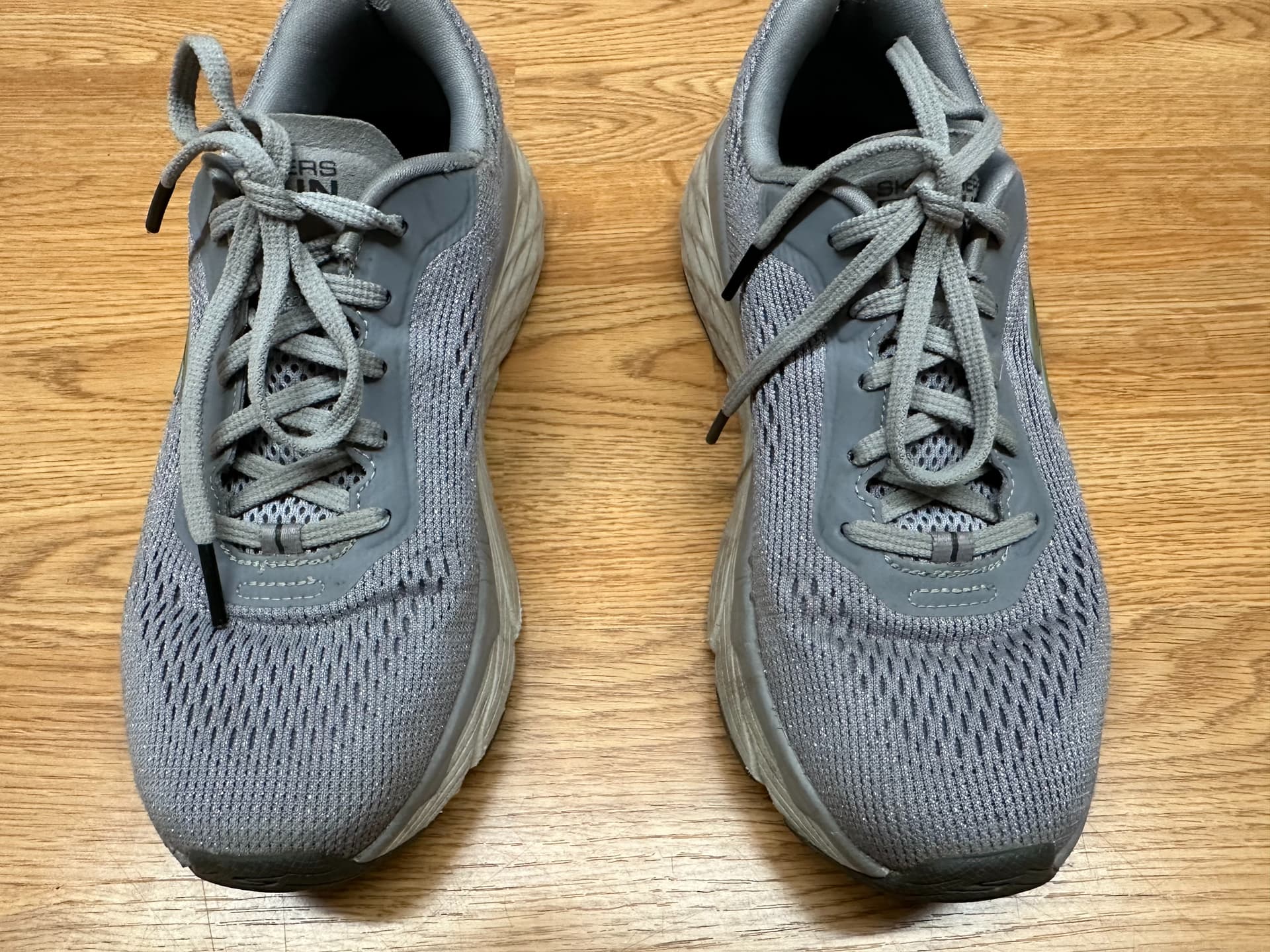
8:45a Upon visual inspection, both sneakers appear mostly dry. Tactile inspection of the sneakers reveals the test shoe to be completely dry and the control shoe to retain significant moisture. The control sneaker’s insole, in particular, is damp to the touch.
The experimenter walked around in both shoes simultaneously for 5 minutes. There was appreciable transfer of moisture from the control shoe to the sock, while the sock in contact with the test shoe remained dry.
The experimenter judged the test sneaker to be 100% dry* and the control shoe to be 85% dry after 39 hours of drying time. The experiment was terminated at this time.
*In retrospect, the control shoe was probably 100% dry on the first observation.
CONCLUSIONS
Stuffing newspaper into a wet sneaker helps it dry out significantly faster than just leaving it to sit with no other treatment. The particular method used here—removing the first batch of newspaper as soon as it is saturated, replacing it with dry sheets, and then repeating this replacement process one more time, all within the first few minutes of the drying procedure—resulted in a dry sneaker overnight. The state of dryness was first checked almost 14 hours after the start of the drying process, so it is possible that an acceptable level of dryness may have been reached considerably earlier than that.
THEORY
The highly porous and absorbent nature of dry newspaper wicks away moisture from the wet sneaker. Saturated newspaper is less able to absorb further moisture from the shoe; therefore, replacing the wet newspaper with dry sheets allows the wicking process to proceed more effectively. Removing the last batch of damp newspaper allows the remaining moisture in the sneaker to evaporate (air-dry).
