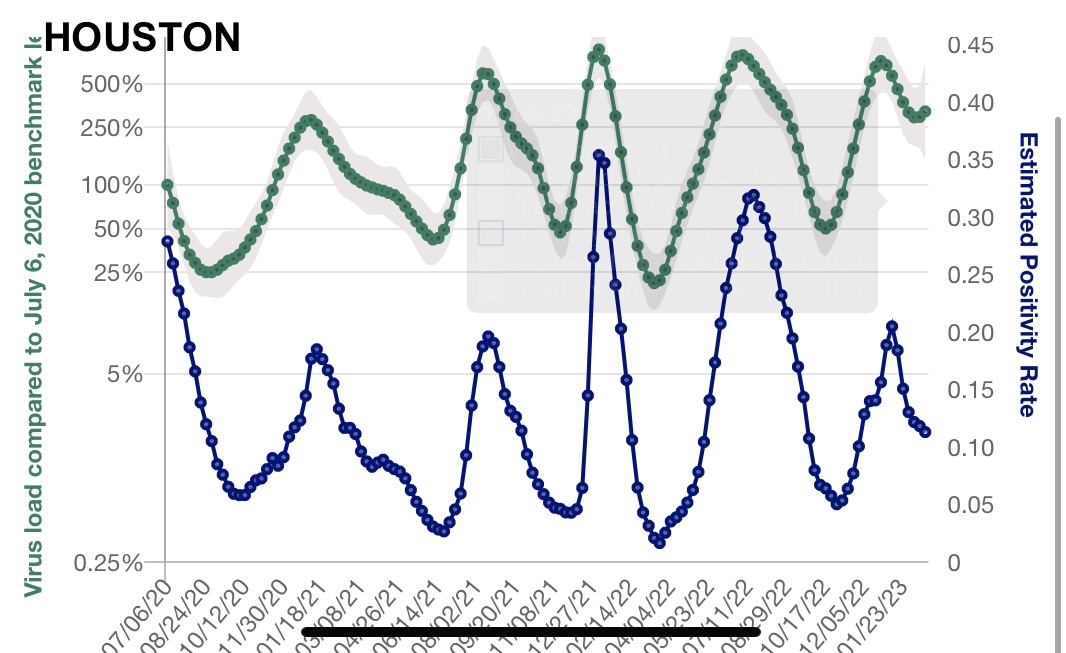
@ehsanchez Brilliant, no? 
This has been up for a while, but I just came across it today. Assuming that snopes is right (and I consider snopes to be a reasonable source), this actually kind of gives me hope.
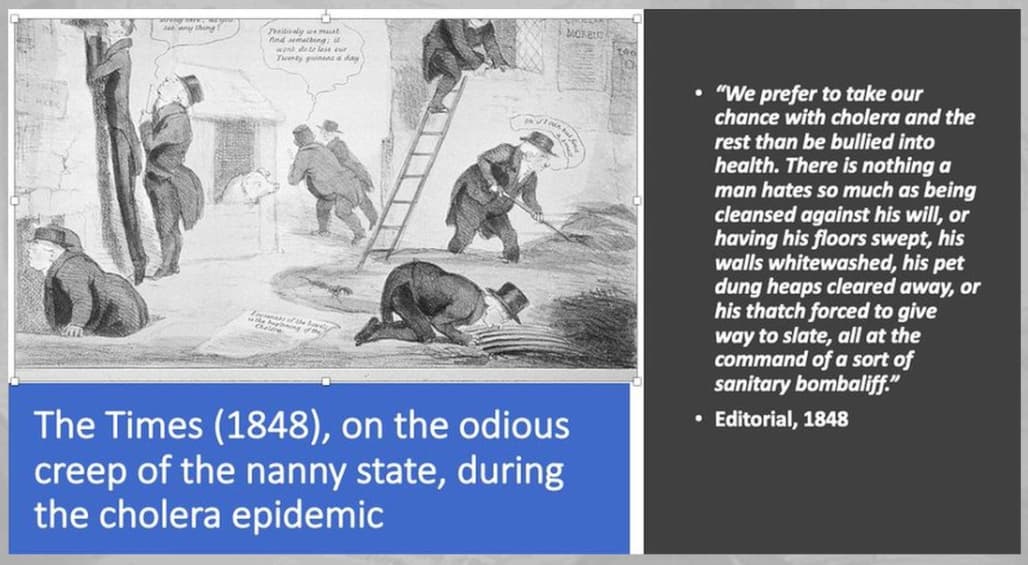
If it isn’t new for people to be resistant to novel public health measures and in the past we’ve been able to effect change over time, maybe someday it will be more common to have improved ventilation and filtration of air. 
5 Likes
Yes, and I see three barriers that need to be overcome:
(1) Lack of education/information. This one is inexcusable and probably the most important. The CDC and other health organizations should be promoting increased ventilation and filtration like they promote washing hands. There are some people who would get on board if they understood the issues.
(2) Cost. Some measures are cheap like opening windows when the weather is nice. But other measures are costly like HEPA filters, modifications to HVAC systems, and paying for heat/AC when windows are open in temperatures that are not ideal. Many people/businesses cannot afford better filtration/ventilation (or prefer to allocate available funds for other uses – this partially ties in to problem 1 above). And unlike water, air needs to be cleaned in the place it is consumed, not at an off-site area and pumped in. I hope that these technologies (and new air cleaning technologies) can be made cheaper/better.
(3) Noise. Some of the solutions like stand alone HEPA filters are relatively noisy. Less noise would make HEPA filters more palatable to more people.
2 Likes
Those are good points.
Another barrier to open windows are seasonal allergies. One of my kiddos really could not handle having windows open in May and June, when their allergies are at their worst.
I’d love to see building codes updated for new construction, making better ventilation a requirement for new buildings. Often things are less expensive to integrate from the start, rather than having to retrofit existing systems. That’d be a start, at least, and one way to potentially mitigate the cost.
Such a requirement could help bring costs down in the market overall, as there’d be a greater demand for ventilation and filtration technologies. It might also encourage development of better/cheaper ways to achieve ventilation.
We could consider requiring better ventilation or filtration when HVAC systems are replaced in existing buildings. I’m not sure if that’d work as well, though. Some systems don’t use heated air and air vents, so an update to HVAC wouldn’t always dovetail well with improved ventilation or filtration.
Lots of places use wells rather than city/town water, but there are still rules that help ensure water safety: rules about where a well can be sited, who is qualified to drill the well and who can connect the well to the water distribution system, well testing requirements after installation, etc. At least, in my area there are rules to that end. It’s possible that there are areas where wells are completely unregulated.
8 Likes
Those with young kids may be interested to hear that Pfizer/BioNTech asked the FDA for an EUA for its BA.4/5 booster for kids under 5 years.
7 Likes
Our DD 11, who is now wearing adult sized masks, wore kid sized ones from Vida for most of the pandemic. She liked the bright colored ones.
3 Likes


You might be interested in YLE’s recap of the situation. I don’t think there’s anything groundbreaking in her post, but possibly a framework in thinking about it.
3 Likes
Thanks! I’ll check it out.
I’ve read this several times and I still don’t get it. They want people to briefly take off their masks as they enter a business to reduce crime, b/c then their faces are recorded? How do the businesses know if someone is severely immunocompromised or not?
3 Likes
I’ve been sort of following the Twitter chatter on this. From what I’ve gathered, shoppers are supposed to briefly remove their masks upon entering so the security camera can get a clear shot of their faces but they can then put them back on while they are shopping. 
3 Likes
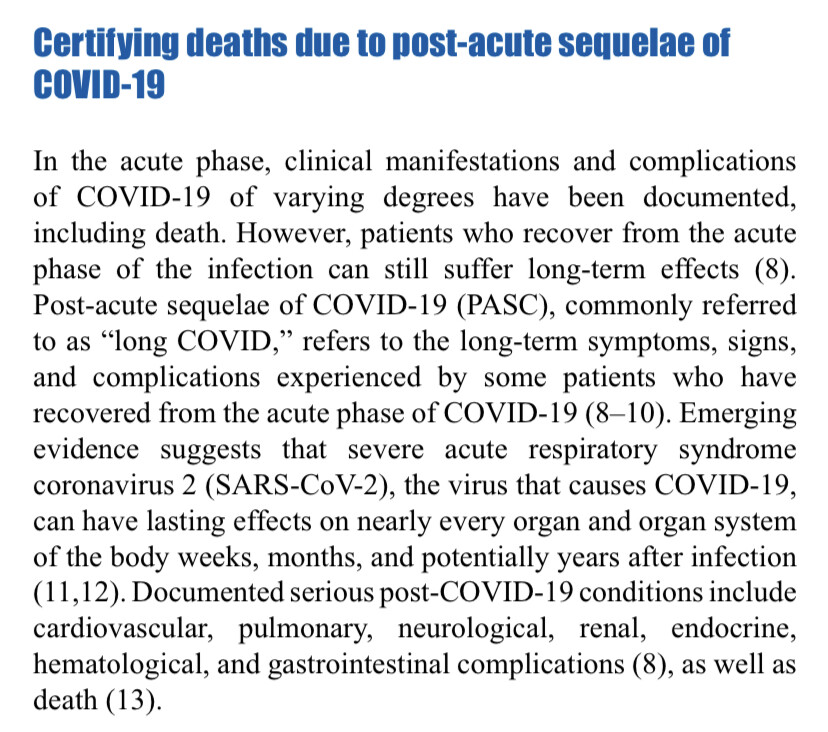
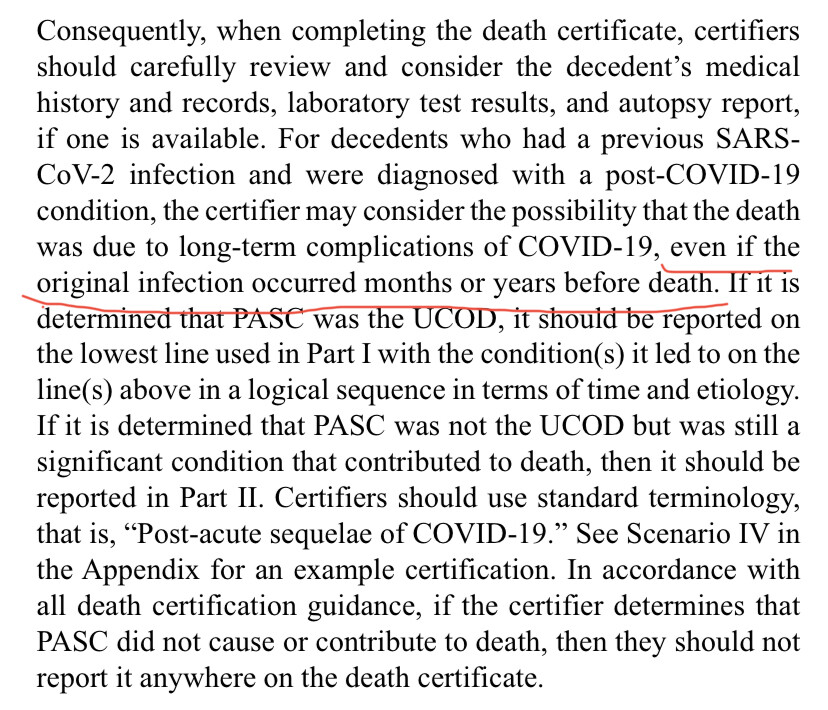
Apparently in February the CDC expanded their Covid deaths reporting to specifically include reporting those from Long Covid, identified as such. 
6 Likes
In positive news, research just came out that long COVID much less likely with Omicron.
4 Likes
My husband got his first negative test on day 11. He took one on days 12-14, getting negatives those days as well. So he has been back into rotation in our household for about a week now. My daughter and I miraculously escaped infection or at least any symptoms if we ever did get it. So grateful.
It has left me all confused, though. My daughter and son go out and about…college, high school, sports, restaurants, no masks. My husband and I allow them to take most of the dice rolls/risks for our household. My husband and I wear our kn95 masks without exception when out of our home. And we do very little outside the home.
Yet he’s the one to get Covid. And I was with him….I later calculated….about 9 or so hours in our family room while he had a 104 degree fever and I never got it??? It is bizarre, makes me feel like the virus has a brain and plan of attack, yet also like it’s the “luck of the draw” as my daughter puts it. No matter what risks or precautions….it’s just gonna happen if it happens??
I guess I’m not the only one. Osterholm’s last two podcasts have kind of addressed this weird….what do we do now feeling/decision-making. I feel a bit stuck and at a crossroads of whether to keep masking or not. I realize most of society has already “been there, done that. “ But I also have all sorts of guilt about if I do start acting more “prepandemic”….knowing my dad likely will never be able to live life that way again. He’s 84. My sister with downs lives with my dad……is now bed ridden experiencing early dementia, and refused any vaccination. So we have been careful with and for them almost more than ourselves.
Plus, Covid kept us from being with my mom in her dying days when she was diagnosed with pancreatic cancer April 2020 & we weren’t allowed with her in the hospital due to Covid even though we were in lockdown and had no means of being exposed or infected since we were truly in lockdown. So letting go of Covid precautions now feels like being kept from her during that time was even more meaningless.
Anyway, just struggling.
Also….is there some sort of life/body/organ system scan my husband should consider now that he had Covid? To make sure no lasting damage has been done?
10 Likes
I don’t know the answer, but your thoughts and feelings are completely valid and I understand.
3 Likes
Great news!
I disagree. It’s all about probabilities. Precautions make it less likely a person gets infected, but some people who take many precautions will get Covid. That doesn’t mean the precautions weren’t effective in reducing the chances of infection.
So many factors … the number of antibodies you have left in your system from the vaccine, the current state of your immune system, the amount of virus you were exposed to, and while I don’t know the science behind it, I have read that some people are less contagious than others.
It’s tough. I think many are struggling to varying degrees with what precautions to take. Feel free to vent to us any time!
8 Likes
I’m so sad for you and everyone who couldn’t be with their loved ones during their last days (we experienced it too with DFIL). I don’t think there’s a right or wrong answer. That’s part of what makes the decision so difficult.
10 Likes
I’ll just add this to what’s already been said…
Not really. Long Covid can show up in a multitude of different ways. And they are still trying to find corresponding bio markers for those that have symptoms, so not even close to having anything predictive yet.
6 Likes
And it can fade and flare. Bosses wife has been dealing with it for a while, years. She got the dominate strain running around in early Fall 2020. I think it was Delta but now I can’t recall. She’ll go a month perfectly fine and then couple it with allergy season or stress or anything really and she’s confined to her house miserable and drained for weeks. It’s horrible. She still thinks it’s better than getting the vax though. 
7 Likes