It occurs to me just now that if, in fact, they proceed with the court case on this, the medical details WILL, in fact, come out in the the course of the trial. It becomes evidentiary. And, generally speaking, court cases are subject to the freedom of information act. So, unless this leads to some out-of-court settlement (which UOR might agree to just to put the issue to rest), we MIGHT end up finding out the actual details. I’m wondering if the family wants to actually go there.
I agree with Jeff that we’re unlikely to hear anything more definitive about the cause of death from Universal, but not because of privacy issues. There’s a lawsuit pending, so legal advice is generally to say publicly as little as possible.
I tend to think so…ESPECIALLY since UOR decided to change policy and signage. We know that is to both cover themselves going forward, as well as have a secondary “check” against accessibility enforcement. But the fact that a change was made does mean that, in a trial, they would probably lose…not because the ride was faulty, but because their precautions weren’t good enough.
Maybe it isn’t called FOIA then…but in Florida, everything is allowed to be made public. My wife watches a lot of these videos, and so many of them happen in Florida because Florida laws allow access to all this information. I thought it was FOIA, but maybe it isn’t called that for the Florida law.
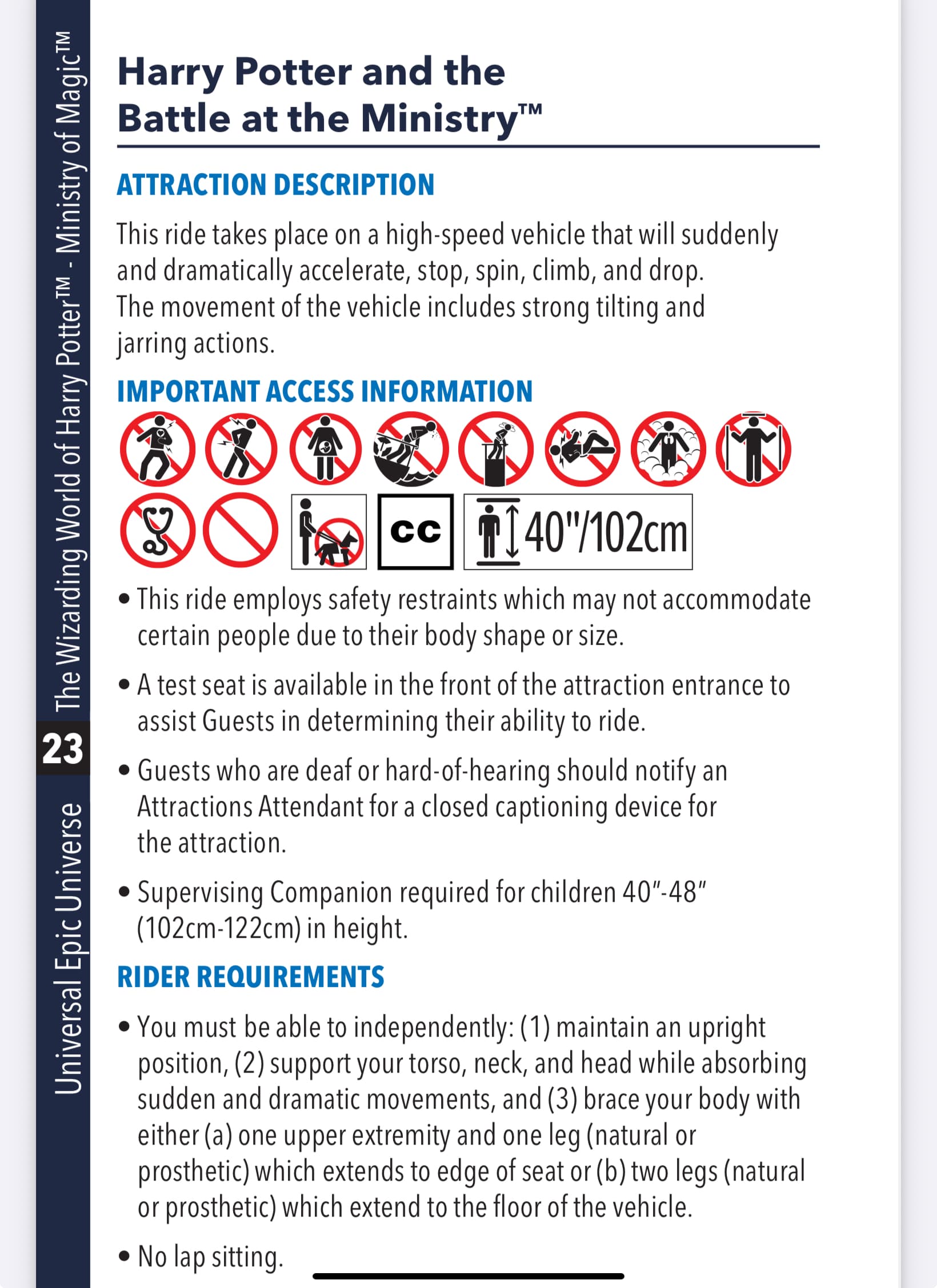
Can someone help me? Was the statement regarding needing to brace your head, neck, and torso while absorbing sudden impacts? I don’t remember that being posted before? I also would need some examples to know what that blanket statement actually means.
I know there are a lot of opinions that it was up to Kevin to decide if he could ride. Since the info and requirements have been changed, maybe he didn’t have all the info he needed to make that decision? That being said, the new guidance and blanket “all of these attractions have the exact same warnings” doesn’t help many of us. Just my personal opinion.
This is a very good point. To steal (and change the meaning of) the famous line from The Incredibles, “When everyone’s special…no one is.” When ALL rides say you essentially shouldn’t ride, do the warnings actually have any useful meaning?
That is what I have been struggling with. I had riled out Stardust but according to the warnings I should rule just about everything? I don’t know if I can stop every attraction from smashing my head?
So…unrelated to UOR at all, but related to judging if one should ride a coaster…at Cedar Point, they transformed Mean Streak into Steel Vengeance. SV is an incredible ride experience unlike any other. Ties with Millennium Force as my favorite coaster. Anyhow, most of my family, including myself, had ridden SV without issues. So, my wife decided to give it a go as well.
For reasons we don’t really understand, the ride experience become rather nightmarish for her. The pain was incredible, and after she got off, the tops of her thighs were bruised so badly that you’d think she’d been beat up or whacked with a metal pole or something. The bruises took a few weeks to ago away. Why did it impact her this way, but the rest of us had no issues? We don’t know. And there was no way she could have known until she rode it.
I haven’t ridden BatM yet…but if I compare riding Hulk to, say, riding FJ, I’d say that FJ takes more “effort” to ride due to the sudden movements and such. I put more effort into bracing myself. If BatM is the same, I could see why the wording is there. Hulk can perhaps be a little rough, but I don’t have to “work at it” so much.
ETA: This is true of many coasters. I ride MOST coasters with hands up/not holding onto anything. I ride FJ by holding on the whole time!
And, that makes a lot of sense. I was mentally trying to figure out what the other P stood for. I came up with “personal” but that didn’t sound right. I was about to Google it after my check in here.
No. I was thinking it’s why they (TMs) have to be careful what they ask a guest regarding a disability or medical concern.